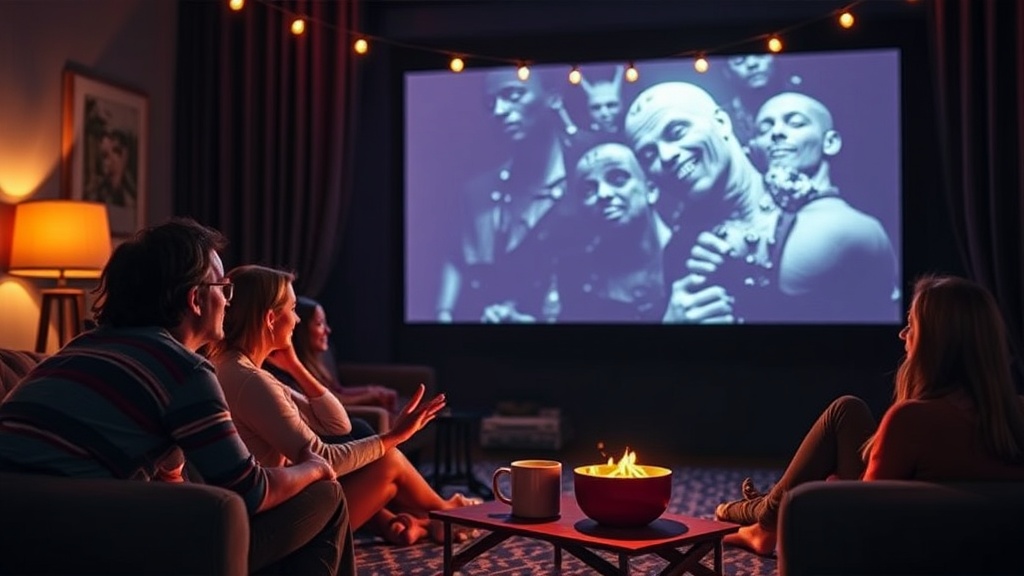
Making Family Movie Night a Special Connection Ritual

Many parents treat movie night as a passive way to "shut down" the kids or get an hour of quiet time, but viewing it as mere downtime is a mistake. When done intentionally, a family movie night isn't just about watching a screen—it's a structured opportunity for social-emotional development and shared language. This post explores how to transform a standard Netflix session into a ritual that builds connection, supports communication, and strengthens the bond between you and your children.
The biggest misconception is that screen time is inherently "bad" for connection. In reality, the problem isn't the screen; it's the lack of engagement around it. If you're just sitting in silence while the kids stare at a screen, you're missing a massive chance to connect. If you treat it as a shared event rather than a distraction, it becomes a tool for learning.
How Can Movie Night Support Emotional Development?
Movie nights support emotional development by providing a safe, fictional environment for children to observe complex human emotions and social dynamics. When a character in a Disney or Pixar film experiences frustration, joy, or loss, it gives your child a concrete reference point for their own feelings. This is a way to practice empathy without the high stakes of real-world conflict.
Think about the last time your child saw a character fail at a task. Instead of just watching, you can use that moment to bridge the gap to their real life. You might ask, "How do you think the character feels right now?" This ties directly into building empathy in your preschooler by helping them name and recognize emotions in others.
It works because stories act as a mirror. A child might not be able to explain why they're angry, but they can certainly tell you that a character is "mad" because they lost a toy. This shared vocabulary is a huge win for development.
Ways to engage during the film:
- The "Check-In": Ask how a character's face looks during a certain scene.
- The "What If": Pause the movie and ask, "What do you think happens next?"
- The "Connection": Relate a character's struggle to something your child experienced (e.g., "Remember when you were nervous for your first day of school? That's how the character feels!").
What Are the Best Ways to Create a Family Ritual?
Creating a ritual requires consistency, a specific sensory setup, and a sense of anticipation. A ritual isn't just a habit; it's an event that feels special because it follows a predictable pattern. When children know exactly what to expect, it lowers their anxiety and increases their sense of security.
Start with the environment. Don't just sit on the couch. Make it an experience. Maybe you bring out the heavy weighted blankets from Target or set up a "fort" using pillows and sheets. The physical change in the environment signals to the brain that this is a special, non-routine time.
Here is a quick breakdown of how to structure your ritual levels:
| Level of Effort | The Setup | The "Special" Factor |
|---|---|---|
| Basic | Standard couch seating | A specific "movie snack" like popcorn. |
| Intermediate | Floor cushions and blankets | A "ticket" system where kids "buy" entry. |
| Advanced | Full living room fort | A themed snack (e.g., blue snacks for Finding Nemo). |
The goal isn't to spend a fortune on decorations. It's about the intention. Even just dimming the lights and using a specific flashlight to "announce" the start of the movie can make a difference. It creates a boundary between the chaos of the day and the calm of the evening.
How Do You Manage Screen Time Without the Guilt?
Manage screen time by setting clear boundaries and using the movie as a tool for connection rather than a babysitter. The guilt usually stems from the feeling that we are "zoning out" our kids. But if you are actively discussing the plot, the themes, and the characters, you aren't zoning out—you're engaging.
The key is to treat the movie as a conversation starter. If you find yourself scrolling on your phone while they watch, stop. If you're distracted, they'll be distracted. Put the phone in another room. This shows them that this time is valuable. It’s a form of "undivided attention" that is often more important than the actual content on the screen.
On the flip side, if your child is struggling with transitions or emotional regulation, a movie can actually be a great way to decompress. However, you have to be careful with the content. High-stimulation, fast-paced shows can sometimes lead to overstimulation. If you notice your child getting "wired" or hyperactive, it might be time to pivot to something slower or turn the screen off entirely.
If your child is particularly sensitive to sensory input, you might want to look into sensory processing and how it affects their reaction to light and sound. A movie night can be a great way to test how different environments affect their mood.
The "Golden Rules" of Family Movie Night:
- Pick the movie together: This gives them agency and a sense of control.
- Limit the "Tech": No phones for parents—this is a shared experience.
- The "Post-Movie Debrief": Spend 5 minutes after the credits roll talking about your favorite part.
Sometimes, the best part of the night isn't the movie itself. It's the quiet conversation that happens afterward while you're folding the blankets or cleaning up the popcorn crumbs. Those small, low-pressure moments are where real connection lives. You aren't just watching a film; you're building a memory.
If you find that your child needs more structure in their daily life to feel successful, you might also find value in building a calm morning routine. Consistency in the morning often leads to more successful, regulated evenings.
It's easy to fall into the trap of thinking that "quality time" has to be an expensive outing or a high-energy activity. It doesn't. It can be as simple as a shared bowl of popcorn and a story about a brave little turtle. The magic is in the ritual, the presence, and the way you show up for the small moments.