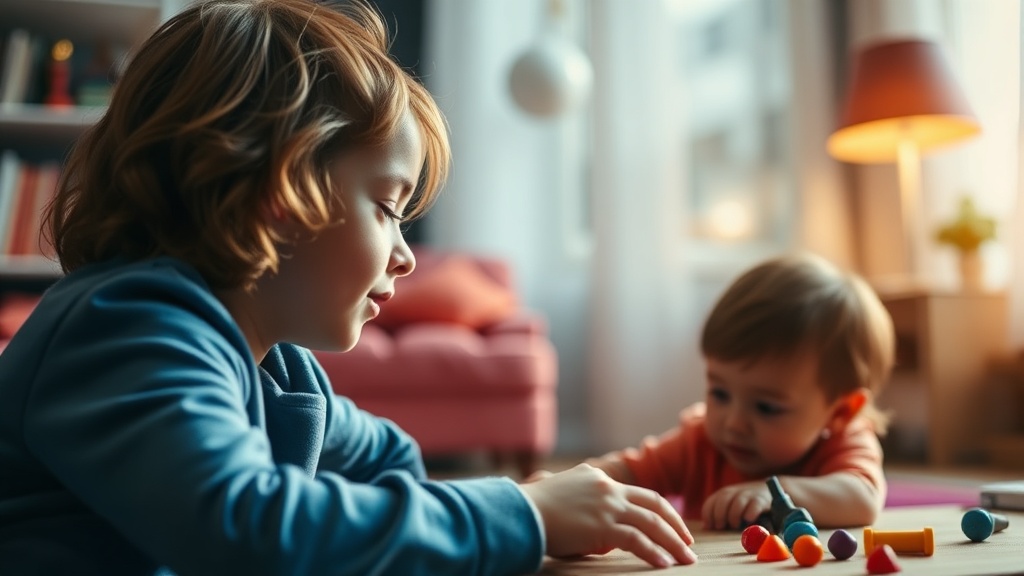
Why Your Child Suddenly Stopped Playing Alone (And How to Get It Back)

By age four, most children can entertain themselves independently for nearly an hour. Yet somewhere between preschool and early elementary, many parents watch that capability vanish—replaced by a constant chorus of "I'm bored" and a shadow that follows them from room to room. This shift isn't random, and understanding why it happens is the first step toward helping your child reclaim one of childhood's most valuable skills.
What Happened to Independent Play?
Independent play doesn't disappear overnight. It erodes gradually—often right alongside developmental leaps that seem unrelated. When children enter structured school environments, their brains adapt to external direction. Teachers set the schedule, classmates influence the activity, and the bell dictates transitions. This external structure is necessary for group learning, but it comes at a cost: children begin to lose trust in their own ability to generate entertainment.
The pandemic accelerated this trend dramatically. A 2021 study from the American Academy of Child and Adolescent Psychiatry found that children who spent extended periods in remote learning showed significantly reduced capacity for unstructured play—even months after returning to in-person activities. The constant screen-mediated interaction replaced the natural pauses where imagination previously flourished.
There's another factor parents rarely consider: overscheduling. When every afternoon is packed with activities—soccer, piano, coding club, art lessons—children never experience the productive boredom that breeds creativity. They become activity consumers rather than activity creators. And when the schedule finally clears, they're lost without external direction.
Is It Normal for My 7-Year-Old to Need Constant Entertainment?
Yes—and no. Developmentally, seven-year-olds are capable of sustained independent play. However, the capacity and the habit are different things. A child might have the cognitive ability to build with LEGOs for forty-five minutes but lack the practice of doing so without interruption. Think of it like a muscle that's atrophied from disuse.
The real question isn't whether it's normal—it's whether it's healthy. Children who can't tolerate their own company often struggle with self-regulation later. They become adults who need constant stimulation, background noise, and external validation. The ability to be alone with one's thoughts isn't just convenient for parents; it's a foundational life skill tied to emotional resilience.
That said, there's a difference between wanting company and needing direction. A child who invites you into their imaginary world is different from one who demands you entertain them. The former shows social connection; the latter shows dependence. Your goal isn't to banish yourself from their play entirely—it's to shift the dynamic from "you entertain me" to "we each do our thing, sometimes together."
Why Won't My Child Play Independently Anymore?
Several hidden forces might be at work. First, consider the attention economy happening inside your home. Screens—yours included—create an environment where passive consumption feels normal. When a tablet offers infinite novelty at the swipe of a finger, building a block tower requires more cognitive effort than a developing brain wants to expend. The comparison isn't fair, but it's real.
Second, many parents unknowingly sabotage independent play by checking in too frequently. "What are you building?" "That's nice, honey." "Be careful with those blocks." Each interruption breaks concentration and trains children to seek external validation for their activities. Zero to Three research indicates that children whose play is constantly directed or praised show less persistence when faced with challenges.
Third, anxiety plays a larger role than most parents recognize. Children who won't leave your side may be experiencing separation anxiety that manifests differently than the clingy toddler variety. Older children often lack the vocabulary to express worry, so they simply stay close. If your child's need for company started after a move, family change, or even a scary movie, anxiety might be the driver—not laziness or manipulation.
The Screens You Didn't Notice
When we think of screen time, we picture tablets and TVs. But background screens matter too. A phone face-up on the coffee table, a podcast playing while you cook, the news droning during breakfast—these create an environment of constant input. Children absorb this ambient stimulation and struggle to generate their own when the screens go off. Try a "no input" hour where all screens are off and no audio plays. The initial protest will be loud. The eventual result might surprise you.
How Can I Help My Child Play Alone Again?
Rebuilding independent play requires a two-pronged approach: environmental setup and parental restraint. Start by creating what psychologists call an "invitation to play"—materials left out in an appealing, accessible way. A puzzle on the coffee table, art supplies on the kitchen island, building materials on the floor. Not everything at once—that's overwhelming. One option, rotated regularly, removes the decision fatigue that stops many children before they start.
Then comes the hard part: you need to leave. Not physically (initially), but attentionally. Sit in the same room with a book or laptop. Be present but unavailable for entertainment. When your child approaches with "I'm bored," respond with "I have faith you'll figure it out" and return to your activity. This feels cruel the first dozen times. It isn't. You're teaching them to trust their own resourcefulness.
Start small. Ten minutes of independent play is a victory for a child who's lost the habit. Use a visual timer so they can see the finish line. Gradually extend the duration as their stamina builds. And—this is critical—don't praise the activity itself. Instead of "What a beautiful drawing," try "You worked on that for twenty minutes." Praise the persistence, not the product.
For older children (ages 8-10), consider a "maker box" approach. Fill a container with recyclables, tape, string, and random materials. Give them a challenge: "Build something that can hold three books" or "Create a game for two players." Constraints actually boost creativity—blank-page syndrome affects children too. The American Psychological Association notes that structured autonomy—freedom within boundaries—produces the highest quality independent play.
When to Worry (And When to Wait)
Most independent play struggles are behavioral, not clinical. But some signs warrant professional conversation: if your child genuinely cannot tolerate being alone for even five minutes, if separation causes physical distress (vomiting, shaking), or if the need for company is accompanied by sleep disturbances or regression in other areas. Otherwise, patience and consistency usually win. The child who played happily at four can find that capability again—it just takes time and intentional practice.
Remember: your goal isn't a child who never wants your company. It's a child who can tolerate their own. These are different things, and only one of them prepares them for a healthy adulthood. Start today. Put down this article, set out some blocks, and practice being boring. Your child might just surprise you with what they build when you're not looking.