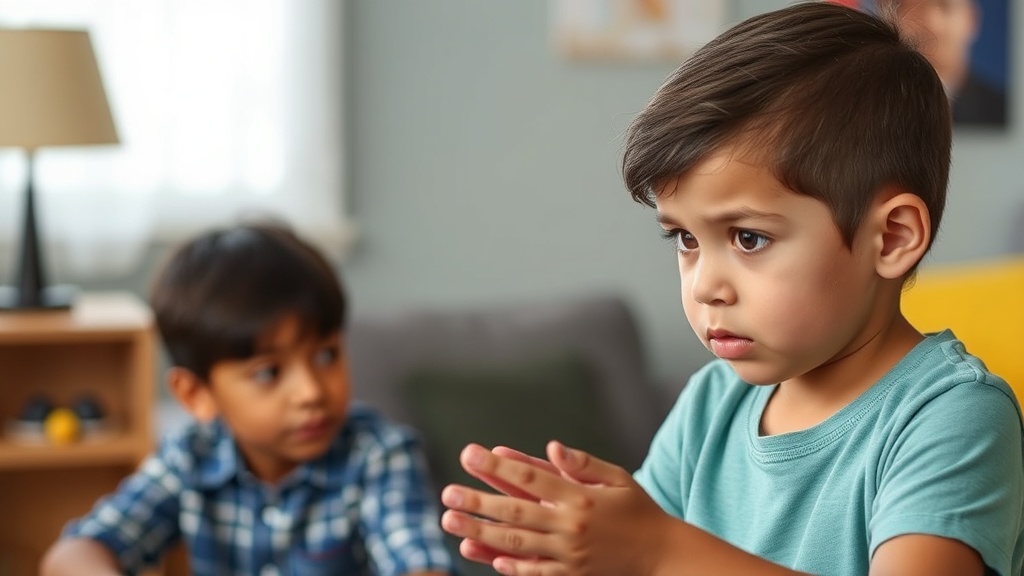
Why Do Some Kids Handle Frustration Better Than Others? 7 Small Shifts That Build Emotional Resilience

Here's something that might surprise you—research from the Center on the Developing Child at Harvard University suggests that how parents respond to everyday emotional moments has a stronger influence on a child's long-term resilience than any single parenting philosophy or technique. It's not about being perfect. It's about being present in the messy, ordinary moments that fill a typical Tuesday afternoon.
This post examines seven practical, research-backed approaches that help children develop the emotional skills they need to handle setbacks, disappointments, and challenges. These aren't complicated strategies requiring special equipment or hours of preparation. They're small shifts—tiny pivots in how we respond to our children's big feelings—that compound over time into something meaningful.
What Exactly Is Emotional Resilience in Young Children?
Before diving into specific strategies, let's clarify what we're actually talking about. Emotional resilience isn't about suppressing feelings or putting on a brave face. It's the capacity to experience difficult emotions—frustration, sadness, anger, disappointment—and recover from them. Think of it as emotional flexibility rather than emotional toughness.
Children aren't born with this skill fully developed. The prefrontal cortex—the brain region responsible for impulse control, problem-solving, and emotional regulation—doesn't fully mature until the mid-twenties. This means young children literally cannot regulate intense emotions without adult support. They're not being difficult; their brains are under construction.
According to Harvard's Center on the Developing Child, resilience develops through supportive relationships and the gradual acquisition of specific skills. It's built through thousands of small interactions—comfort after a scraped knee, guidance through a sibling conflict, patient support during a homework meltdown. Each interaction is an opportunity to strengthen neural pathways that help children manage stress.
Why Does Naming Emotions Help Kids Regulate Better?
When your four-year-old collapses into tears because their sandwich is cut into squares instead of triangles, your first instinct might be to fix the situation—or perhaps to feel frustrated yourself. But there's a remarkably simple intervention that neuroscience supports: just name what they're feeling.
Dr. Dan Siegel, clinical professor of psychiatry at UCLA, calls this "name it to tame it." When we label emotions—"You're feeling really disappointed about the sandwich"—we engage the prefrontal cortex, which helps calm the amygdala (the brain's alarm system). Research published in Developmental Psychology found that children whose parents regularly labeled emotions showed better emotional understanding and fewer behavior problems by age five.
This doesn't mean lengthy lectures about feelings. A simple acknowledgment works: "This is hard," or "You're angry that we have to leave the park." The key is specificity. "Upset" is vague; "frustrated," "disappointed," or "annoyed" are precise. Children learn that emotions have names, that they're temporary, and—crucially—that experiencing difficult feelings is normal and survivable.
How Can Ordinary Challenges Become Teaching Moments?
We often want to smooth the path for our children—to tie the shoe they can't quite manage, to intervene when block towers collapse, to resolve every peer conflict. But resilience requires struggle. The goal isn't to eliminate challenges; it's to help children develop the confidence that they can handle them.
This concept—sometimes called "scaffolding" in developmental psychology—means providing just enough support so children can stretch slightly beyond their current capabilities. When your toddler tries to zip their coat, instead of taking over, you might hold the bottom steady while they work the zipper. When your six-year-old forgets their homework, you resist the urge to drive it to school.
These moments feel small, but they accumulate. A child who regularly experiences manageable challenges—with support available when truly needed—develops what psychologist Carol Dweck calls a "growth mindset." They come to see difficulties as temporary obstacles rather than permanent barriers. They learn that effort matters, that mistakes are information, and that they are capable of solving problems.
What Role Does Predictable Routine Play in Emotional Stability?
Children crave predictability—not rigid schedules, but reliable patterns. When children know what to expect, their brains can relax. They don't have to constantly scan for threats or changes. This freed-up cognitive bandwidth becomes available for learning, play, and emotional regulation.
A predictable routine doesn't mean every minute is scheduled. It means there's a rhythm to the day: breakfast happens before school, we read books before bed, Saturday mornings are for pancakes. These anchors provide security. When everything else feels uncertain—new teachers, shifting friendships, growing bodies—the routine holds.
Research from the Zero to Three Foundation indicates that consistent routines help reduce cortisol (stress hormone) levels in young children. Lower baseline stress means more emotional resources available when challenges inevitably arise. It's like building a foundation; the stronger it is, the more the structure can withstand.
Is It Okay to Let Kids Experience Disappointment?
This might be the hardest shift for many parents. Watching your child experience disappointment—missing a party, not making the team, losing a game—activates protective instincts. We want to shield them from pain. But disappointment is instructive. It's how children learn that they can survive difficult feelings.
The key is presence, not rescue. You don't need to fix the disappointment or talk them out of their feelings. Simply being there—offering a hug, acknowledging the difficulty, sitting quietly nearby—communicates something powerful: "This feeling won't break you, and you don't have to face it alone."
Over time, children internalize this message. They develop what researchers call "secure attachment"—the confidence that support is available when needed, which paradoxically gives them the courage to venture out independently. They learn that emotions are waves that rise and fall, not permanent states. This understanding becomes the foundation of genuine resilience.
How Does Modeling Emotional Regulation Teach More Than Words?
Children are observation experts. They watch how we handle traffic jams, work frustrations, burnt dinners, and disagreements with partners. Our responses become their template for handling their own emotions.
This doesn't mean being perfectly calm all the time. That's neither realistic nor helpful. What matters is showing that emotions can be managed—even when they're intense. Narrating your own process helps: "I'm feeling frustrated that dinner burned. I'm going to take three deep breaths and then figure out what to make instead." This demonstrates that feelings and actions are separate; we can feel angry without acting destructively.
When we make mistakes—which we will—repair matters. Apologizing to your child after losing your temper models accountability and shows that relationships can survive conflict. It demonstrates that perfection isn't required for connection, and that we can recover from emotional missteps.
Can Simple Play Actually Build Resilience Skills?
Play isn't frivolous—it's the primary way young children process experience and develop self-regulation. Through play, children practice managing frustration (the block tower falls), negotiate conflict (whose turn is it?), and persist through difficulty (figuring out a puzzle).
Unstructured, child-directed play is particularly valuable. When adults step back—resisting the urge to direct, teach, or entertain—children learn to rely on their own resources. They get bored, then figure out what to do about it. They encounter problems, then experiment with solutions. This builds what psychologists call "self-efficacy"—the belief in one's own capabilities.
Free play also provides a low-stakes environment for emotional experimentation. Children can pretend to be brave, angry, or sad in ways that feel safe. They can rehearse scenarios that worry them—a doctor visit, starting school, a new sibling. Through play, they gain mastery over experiences that might otherwise feel overwhelming.
When Should Parents Seek Additional Support?
While these strategies support healthy development, some children need professional help. Persistent difficulties with emotional regulation—tantrums that don't decrease in frequency or intensity after age four, extreme reactions to minor frustrations, difficulty forming relationships, or signs of anxiety or depression—warrant consultation with a pediatrician or child psychologist.
Seeking help isn't a failure; it's responsive parenting. Early intervention is most effective, and trained professionals can offer strategies tailored to your specific child's needs. Sometimes what looks like "bad behavior" is actually a neurodevelopmental difference, trauma response, or mental health condition requiring specialized support.
The goal isn't to raise children who never struggle. Struggle is inevitable—and valuable. The goal is raising children who trust their own capacity to weather storms, who know that difficult feelings pass, who believe that support is available when needed. These children grow into adults who can handle life's genuine hardships with flexibility and hope.