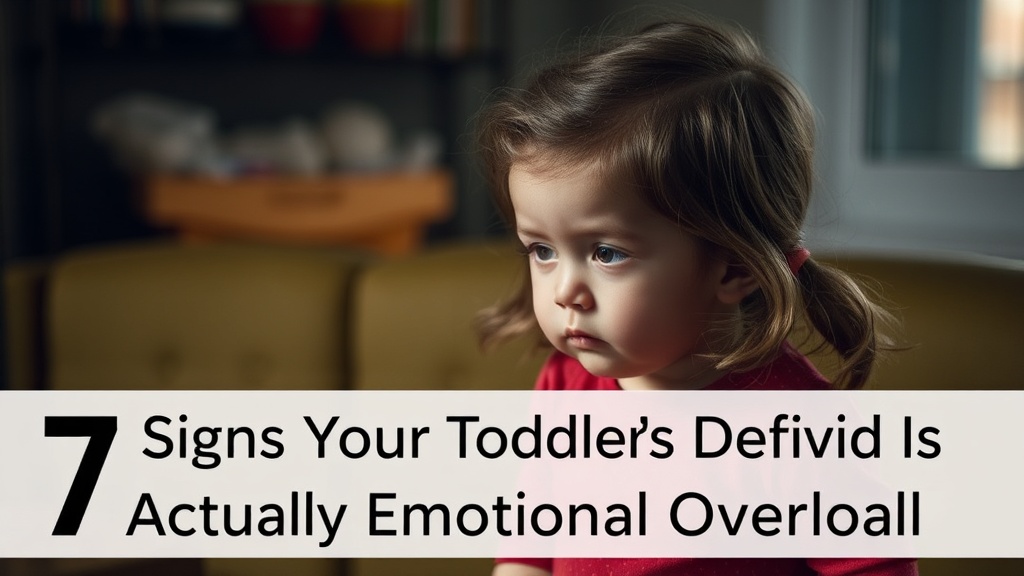
7 Signs Your Toddler's Defiance Is Actually Emotional Overload

They're Not Giving You a Hard Time — They're Having a Hard Time
Most parents believe a toddler's meltdown is some form of manipulation. The tears, the screaming, the flailing on the grocery store floor — it looks intentional. Deliberate, even. We've been told that giving attention to these moments "reinforces the behavior" (as if a two-year-old is running a cost-benefit analysis on public embarrassment). But here's what the developmental research actually shows: your child isn't defying you — they're drowning in emotions they can't process, and home is the only place they feel safe enough to fall apart.
Young children don't have a fully developed prefrontal cortex — that part of the brain responsible for impulse control, logical reasoning, and emotional regulation. It won't mature until their mid-twenties. Expecting a toddler to "use their words" when flooded with big feelings is like expecting someone to do calculus while running a marathon. The skills simply can't coexist in that moment. When we misread these normal developmental moments as intentional misbehavior, we respond with consequences that don't address the root cause — and the cycle continues.
Why Does My Child Behave Perfectly at Daycare Then Fall Apart at Home?
This phenomenon — sometimes called "after-school restraint collapse" — happens because your child is expending enormous energy holding it together in environments where they don't feel completely secure. At daycare or with relatives, they're using their limited self-regulation resources to follow rules, share toys, and manage transitions. By the time they see you, their emotional tank is empty. You're their safe harbor — the one person who won't abandon them even when they're at their worst.
This isn't manipulation; it's a compliment (a exhausting one, admittedly). Your child trusts you enough to let down their guard. The meltdown isn't about the cookie you refused or the wrong color cup. It's about releasing a day's worth of accumulated stress, overstimulation, and unprocessed emotions. When you pick them up and they immediately start whining or crying over seemingly nothing, they're not being ungrateful — they're finally feeling safe enough to stop holding it all in.
1. The 'Tiny' Requests That Trigger Huge Reactions
That catastrophic response to the broken cracker? It's not about the cracker. Toddlers live in a world where they control almost nothing — what they wear, where they go, when they eat. That cracker was within their control, and when it broke, it represented the fundamental injustice of being small in a world run by giants. To them, it's not a minor inconvenience — it's evidence that the universe is unpredictable and unfair. Your validation ("You're really upset the cracker broke") isn't "giving in" — it's teaching them that emotions are manageable when shared with someone safe.
2. The Mid-Aisle Grocery Store Collapse
Supermarkets are sensory overload machines — fluorescent lights, unfamiliar sounds, tempting displays at exactly toddler eye level, and the constant tension of "look don't touch." Add hunger, fatigue, or the stress of a rushed parent, and you've got a neurological pressure cooker. When the explosion happens, your child isn't trying to embarrass you. They're overwhelmed by stimuli their brain can't filter. The AAP recommends keeping trips short, bringing snacks, and offering limited choices to reduce this overwhelm. The American Academy of Pediatrics offers practical strategies for managing public meltdowns without shame or harsh discipline.
Is My Child Actually Manipulating Me When They Cry?
No — and believing this damages your relationship and their development. Manipulation requires sophisticated cognitive skills: theory of mind (understanding that you have different thoughts than they do), planning, impulse control, and the ability to fake emotions. Toddlers have none of these in sufficient measure. When they cry, they're expressing genuine distress — even if the trigger seems absurd to adult logic. Dismissing their feelings as "fake" or "just trying to get attention" teaches them to suppress emotions rather than process them.
The "attention-seeking" framework is particularly harmful. Children don't need less attention when they're acting out — they need more connection. The behavior is communication; the crying is a signal that their emotional regulation has failed and they need an adult to help them return to baseline. When we withhold connection as punishment, we confirm their worst fear: that they're only lovable when they're performing well. This creates anxious attachment patterns that can persist for years. Research from the Zero to Three organization confirms that young children lack the brain development necessary for manipulation in the way adults typically mean it.
3. The Bedtime Battle That Isn't About Sleep
Your child who was perfectly happy five minutes ago is now screaming about bedtime. Is this defiance? Usually, it's separation anxiety mixed with emotional accumulation. The day is ending — time to process everything that happened, everything that felt scary, everything they didn't understand. Bedtime represents loss (of you, of the day, of control) and triggers big feelings that have been politely waiting for a quiet moment to surface. The resistance isn't about hating sleep — it's about not wanting to be alone with overwhelming emotions.
4. The Sudden Aggression During Playdates
Hitting, biting, or pushing doesn't mean you have a "bad kid" or that you're failing as a parent. It means your child has reached their limit and lacks the verbal skills to express it. Toddlers experience frustration as physical tension — their bodies literally need to discharge it. They don't hit because they want to hurt; they hit because they've run out of coping strategies. Teaching replacement behaviors works better than punishment because punishment adds shame to an already overwhelming emotional experience. The CDC recommends parent behavior therapy approaches that focus on teaching skills rather than punitive consequences for aggressive behavior in young children.
What Should I Do When Reasoning With My Toddler Doesn't Work?
It won't work — not in that moment. A child in meltdown mode is operating from their amygdala (the brain's alarm system), not their prefrontal cortex (the thinking brain). Logic requires access to neural pathways that are literally offline during emotional flooding. Your job isn't to talk them out of their feelings; it's to provide co-regulation — using your calm nervous system to help them return to equilibrium. This means staying present, offering physical comfort if they'll accept it, and keeping your own emotions regulated.
The "name it to tame it" strategy — gently identifying the emotion they're experiencing — helps build neural connections between the emotional and thinking brain over time. It won't stop today's tantrum, but it builds the architecture for self-regulation in the future. "You're really mad that we have to leave" validates their experience without changing the boundary. They still have to leave — but they learn that difficult emotions are survivable and that you can handle their big feelings without falling apart yourself.
5. The 'Nothing' That Triggers Everything
Sometimes there's no obvious trigger — or so it seems. But toddlers experience time differently. That meltdown at 3 PM might be about the dog barking at 9 AM, the substitute teacher at daycare, or the way you snapped at their sibling this morning. They don't process experiences immediately; emotions percolate and emerge when they feel safe. The "out of nowhere" meltdown is often the result of emotional digestion — their brain finally processing experiences they couldn't handle in the moment.
6. When Your Stress Becomes Their Dysregulation
Children are emotional sponges. Your unprocessed stress — work deadlines, financial worry, conflict with a partner — registers in their nervous system even when you think you're hiding it. They don't need to understand your problems to feel them. When you're anxious, their world feels unsafe, and they express that unsafety through behavior. This isn't blame; it's biology. Co-regulation means taking care of your own emotional health so you can be the steady presence they need.
7. The Developmental Leaps That Look Like Regression
Just before mastering a major skill — language explosion, motor development, cognitive shifts — children often become clingy, emotional, and difficult. Their brains are literally restructuring, which is exhausting and disorienting. That "defiant" behavior might actually be the growing pains of neural development. The regression is temporary; the skills they're building are permanent. Understanding this doesn't make the days easier, but it reframes them — you're not dealing with a difficult child; you're supporting a developing brain through necessary growing pains.
Connection Before Correction
The research is consistent: children who feel connected to their caregivers regulate faster and develop better emotional control over time. This doesn't mean permissive parenting — boundaries remain important. But it does mean leading with relationship. Before you address the behavior, address the emotional state. Get down on their level. Offer a hug (or just your presence if they're not ready for touch). Wait for the storm to pass. Then — and only then — discuss what happened and what to do differently next time.
This approach takes longer in the moment. It requires more emotional energy than a quick time-out or a sharp reprimand. But it builds the internal regulation systems your child will use for the rest of their life. Every time you help them through a meltdown without shaming them, you're teaching them that emotions are manageable, that they're worthy of love even at their worst, and that you're a safe harbor in an overwhelming world. That's not spoiling them — that's building the foundation for resilient, emotionally intelligent adulthood.